The mark of a professional writer, is they know the genre of their story and the arc it will take. At least that is what Shawn Coyne says in his book “The Story Grid.” Coyne probably knows something about this because as an editor he has looked at enough fiction to determine if it is a finished and publishable novel. He created the Story Grid to weed out the scenes that just didn’t meet the expectations of the genre.
Now, as a mere amateur, I had it in my head there were roughly five main genres you can choose from: Mystery, Crime, Thriller, Western, and Romance. Oh, no, there are many genres and they all have their absolutes, needs, and conventions.
Silly me, I thought you just got the hero in a predicament and through him to the wolves.
Which explains why my latest attempt at winning NaNoWriMo failed: despite efforts to plan, I just didn’t know what came next.
I tried writing a Nicholas Sparks-type of story, which contained less romance and more Hero’s Journey stuff with a girlfriend thrown in for good measure. The fact I was calling it a “Nicholas Sparks-type of story” should have been a clue I didn’t understand my genre.
But, unlike past times, when I just pants away, I honestly felt smug for plotting it out and knowing there should be plotted, pivot, and danger points. I knew my hook, my turning point, and my end. I give myself credit for doing a lot more than the last time.
Still, I didn’t understand my genre, and this was my downfall.
So, back to the drawing board after 6,000 words. And a little research.
Turns out I was attempting to write a Performance genre story with an inner Wordview genre theme. This genre requires certain things to happen and certain characters to make the story work. And after understanding some of this, I now know why I hit the wall when I got to the mid-point. I had left out key parts of the genre.
I’m working out some of those points and already seeing how this story can begin. It is important to understand the nuts-and-bolts of the story. You can rely on instinct to get started, but you really need to plot, plan, and take the story apart before you write.
I’m just glad I stopped NaNoWriMo before I failed. Now, I can get back to work and have something I can be proud of editing next spring.
I received some good news today regarding my contribution to Letters Never Meant to be Read Vol. III. The book is now LIVE on Amazon in paperback and Kindle. Very exciting stuff to find yourself published in an anthology. I wrote my letter a while ago and it was picked up for inclusion in the book.
Have you ever wanted to write a letter to that guy or gal you brushed up against on the train? How about that lost love, or the friend who did you wrong?
This collection contains those letters. I think you will like it.
Cindy’s Sin is the first Las Vegas novelette in a planned series of short stories called Tall Tales of Sin. You can purchase the entire story on Amazon or Smashwords.
The novella starts off with Cindy Lash arriving in Las Vegas to avenge the murder of her father. Cindy appears a novice. But she quickly learns some street smarts to carry her through to the end of her revenge plan.
Cindy Lash came to Las Vegas on the Greyhound Bus. So the first part of the novelette is Greyhound Arriving. If you have ever arrived in Las Vegas in the summer who already know what Cindy feels the moment she gets off the bus; a blast of heat. The hot sun immediately makes her sweat, she gains a couple of guardian angels, sees magic in the Las Vegas neon, and begins her quest.
She’s in Las Vegas to avenge the death of her father Tommy. But getting to the killer will take a bit of luck, magic, and street smarts. She lacks the street smarts, but her luck may turn out to be her best asset. Luck seems to permeate her time in Las Vegas. And good thing too: she quickly chances fate with a shootout in a popular strip bar.
I feature the Las Vegas neon as a central character allowing the magic of the light to flow through Fremont Street and eventually landing at the Neon Boneyard. It’s hard not to feel the energy coming from Fremont Street and the rest of Las Vegas. Stories about people chancing it all, starting over, or finding luck interest me and I hope the reader.
This Las Vegas Novella contains mystery, fantasy, magic, and suspense. From the moment Cindy arrives on the bus to her escape on the bus, she meets up with trouble, confusion, hate, and hope. But it all works out in the end with a confrontation at the Neon Boneyard where the neon lights come to her rescue in a dynamic show of lights and smoke.
This is a fast read for fans of Las Vegas fiction or Las Vegas stories.
This story started as an exercise in learning how to type again. I had a stroke in 2015, which prevented me from driving, walking, writing, reading, and watching television. This happened when I had just turned 52 and set me back emotionally and physically. I honestly thought I would never work or write again.
After relearning many skills, I took to typing 500 words a day to practice typing. Once I had run out of trivial things to type, I chose to think up a short story. And that is how I started and completed Cindy’s Sin.
I spent years before my stroke sitting down at the keyboard and dreaming up a story. It was pretty natural to pour out my thoughts and dreams on the screen. After the stroke, I spent a lot of time distracted; my ADD years. I couldn’t focus and keep on task without a list of where I wanted to go with the story.
That is how I became a plotter. Pantsing is great until you can no longer keep track of what comes next. Plotting allowed me to be more rigid in my writing and stick to a schedule.
I picked up the software Scrivener soon after my stroke because it allowed my to follow a beat sheet and still jump around as I became excited about a certain beat or idea. The non-linear nature of the software allowed me to write out of order whenever I had a new idea during writing my short stories. Sometimes, I find it is easier to write the ending before I get too wrapped up in the story. Scrivener allows me to do that without losing track of the needed beats.
I highly encourage writers to consider beta readers and an editor. I have learned many rules of English and still mess up. An editor catches mistakes or points out areas where the story is weak. Beta readers point out areas where a story falls flat, drags, or doesn’t make sense.
Pick a developmental editor if you are starting out in a genre or have questions about the middle or third-act of a story. Developmental editors point out when a beat is missing or suggest where a story lacks clarity. Proofreaders and grammar editors are important; however, they often find things I can find after a second read. That’s not to say I catch everything. Proofreaders are very important for finding homonyms, British or American English spelling switches, and fragments.
Due to my circumstances, short stories have been best because they don’t require much concentration and can be written in as little as 50 words or less. Most of my longer stories have been between 1,000 and 6,000 words. My novelettes range around 10,000 words. I am pretty pleased to be able to tell a short story in retrospect. Now, I am working on a few novel ideas and am taking my time.
My sophomore English teacher told me to go find something else to do because I couldn’t write. In her defense, I did tend to write prose as poetry with a lot of rat-a-tat-tat words as sentences.
Yet, I ignored her because I didn’t think I could do anything else. I have never stopped writing in one form or another from my days as a television reporter, science writer, and public relations communicator.
Writing just seems to be a natural fit. I never seem to struggle with writing words. Editing them is another struggle, but writing, just flows. Fiction has been something I have tended to do less of in my adult life, and this is an opportunity to strengthen those writing skills.
Somebody told me that if you want to be a real writer you have to put it out there for others to read. I heard of a guy who wrote more than 20 novels and never showed them to anyone. They were all neatly stacked in manuscript boxes for his wife to toss out when he died. Who knows if any of them were any good; nobody read them.
I may bore you, make you laugh at my simplicity, but you will have had an opportunity to read my writing. I sometimes feel like I’m talking to myself. But that’s okay. I’m a good listener.
The following resources I have found to help me organize my stories and stay focused on story points or character motivations:
Character Profile Sheet– I created this tool to help me understand my characters and develop their motivations.
Personality Profiles – Characters act and react based on their unique personalities. This sheet provides basic information about 16 key personality types.
Story Outline Worksheet – This tool helps you plot a storyline and consider the internal and external conflicts the viewpoint character must face. I used to be a pantser until I reached my limit of second-act story and character implosions. This worksheet helps me keep on track.
Plot Denominators – A fast tool to determine the unified action of the story.
When it comes to Writer’s Block, I believe it is as much about confidence and dedication as anything else. Here is what I found works:
• Stick to your writing schedule—Unless it’s a real emergency, stick to your writing schedule no matter what.
• Chose a writing atmosphere—Since writing a book is a creative endeavor, even if you are writing a non-fiction book, consider the environment that will motivate your creative thinking.
• Outline—If you have even a basic outline, you’ll know where you are heading, so there’s less chance of getting stuck. Writer’s block often comes in the form of not knowing where to go next. Always outline a book even if you plan to pants the plot.
• Trade tasks—If the words are just nowhere to be found, switch beats. Do another beat for a while and move your writing time around.
Long ago, I became a news anchor and wrote small, spiffy, stories around 70-words for a living and loved it. Then, I thought I should be a more serious writer and took a job as a science feature writer.
My editor thought I should deliver her at least 3,500 words. I sat at the computer for a long time trying to convince myself that jumping from 100 words to 3,500 words was a small leap.
Aged 23
And, that’s how I became an author.
I love pulp fiction; short stories of crime, hard-boiled detectives, science fiction, very short fiction stories, and westerns. Many of my stories have science fiction or fantastical events. I like surprise endings. I love Travis McGee. You will find a lot of these elements showing up as I continue to write for this website.
I have books for fiction and non-fiction books for sale on Amazon, including Cindy’s Sin. I also wrote a serial about a roustabout handyman published on Wattpad.
Sometimes the best way to fill a blank page is to feed your muse with some writing music. While I would love to have a writing table overlooking the ocean near the cliffs of Big Sur, I can still get there with some music to remind me of the atmosphere and the setting. Of course, writing music also helps me get into a new scene or chapter.
Now, this isn’t a treatise on what type of music to listen to. I get inspiration from country, rock, pop, or classical styles. However, it is a reminder that music is a powerful way to get you into a particular place or character’s mind. Is it any wonder music soundtracks often hang with us longer than the film? That is because music feeds our inner muse and makes the story stronger.
Merle Haggard’s Seashores of Old Mexico serves as inspiration for my work in progress, Fish Tacos. The song tells a story of a fugitive on the run who discovers love in Mexico and a reason to stay on the run.
In fact, story songs are often the best for prompting a new story. What happened to the protagonist? As a writer, we can tell their next story. So, dig out those old vinyl records or that lost playlist and listen. You might find a story hidden in the feeling you get from the music. Even our muse needs writing music from time-to-time to keep us writing.
Well, that’s a mouthful and they had to use an ampersand to make it all fit. However, Neal Soloponte provides 195 plot stages to consider in shaping a novel so the title needs some heft. The Ultimate Hero’s Journey: 195 Essential Plot Stages Found in the Best Novels & Movies delivers so many plot stages that I fell into the rabbit hole Soloponte took in writing this book.
Like my favorite, Structuring Your Novel: Essential Keys for Writing an Outstanding Story, by K.M. Weiland, this book provides an outline of what must go into a novel to make the reader want to finish the story. Except this is a scientific look at the process. Soloponte takes Joseph Campbell’s Hero’s Journey canon (I recommend The Power of Myth) and breaks it down further into what needs to happen as the hero journeys from the reactive (ordinary world) to proactive (adventure world) stages of the novel.
Soloponte says that a good novel contains 3 phases:
Something happens
Someone does something about it
Either things change for the good or bad
He then goes on the show the 195 things that have to take place in each of these phases to grab the audience and hold them until the end.
At this point, it gets rather complicated because you can’t see where all of these stages have to land, other than a rough idea of the progression of the plot. So, you have to keep going back and finding out where you’ve been and what you’re missing. I suggest an overlay of the plot stages over Weiland’s model just to keep track of it all (I may work on something to be downloaded later from my Writing Tools page).
Overall, the book is great and revealing as to what goes into a story with many fine examples examined and torn apart by Soloponte. The author says at least 80 percent of the plot stages he has identified will be found in a great novel. Of course, the creative mind may alter the placement of the plot stages, but Soloponte says the plot stags can be found in the most successful novels.
I recommend this book as an excellent resource into what science finds makes a great story. Of course, we are writers and creative license is something we will always take with us.
I am a big fan of story prompts whether they consist of a word, a sentence, an idea, or a photo. The story prompt serves as a launch pad for creativity and it prompts the writer to see inward, consider possibilities, and think how the reader will respond.
On Steemit, the #freewrite group of writers tackles a daily story prompt provided by @mariannewest. Nearly 250 writers participate by writing whatever comes to mind in five minutes. Some of the output rambles around as the writer latches onto a prompt. Other writing comes away seemingly polished regardless of the writer using The Most Dangerous Writing App, a sadistic writing tool promising to give you the finished work as long as you don’t stop writing. Pause for only a second and it eats your words! Needless to say, I am not a fan. I am all for writing as fast as you can and throwing it away. However, I do like to read it first.
Amazon offers a number of writing prompt books. Writers Digest serves up a weekly offering of Creative Writing Prompts. Even if you choose not to write something to fit that prompt, each one often leads to another idea.
Sometimes an entirely random idea pops in my head, which then leads to a story. I read about a white Redwood “ghost tree” standing on the coast of California. A few days later I heard a lawyer complaining about a long deposition – a pre-interview of a witness. This led me to combining the Redwood with a deposition to write A Moment of Pure Truth. I like to think this story might not have started without the story prompt.
I make a habit of writing at least 500 words in the morning. Some of it is trash; bits of ideas and random observations. Some of it ends up in my Scribbles or Conversations. Most of it ends up deleted. Every once in a while, I find a random idea or sentence that might make a story. I then use this idea for further writing later in the day or week.
Story Prompts in the Wild
You can ask your friends and family for a prompt. What is the first word you can think of? They will probably wonder why you asked, but they can always read the final draft.
An editor may also give you a prompt. I will pay a lot of clams if you write about a physicist who hates the weird and wonderful world of science. Yeah, I can do that.
Read the newspaper. Discounting the threat of “fake news” what better place than the newspaper to prompt your next story? Some of the best mysteries start out as news headlines.
Wherever a story prompt comes from it is bound to result in something you can use. If anything, you can always shake out the cobwebs and get on to the real writing.
Leave me a reply and let me know what you think. All feedback helps me get better.
Oh, the Amazon Link sends me a commission.
Photo by Amber Holmes. Used with permission (She’s my cousin!).
In the fourth grade I received an old manual typewriter. I immediately put out a family newspaper and charged my sisters 5-cents to read it. They loved me and bought my daily scribblings until mom told them to stop it. I then just gave them copies. We never had hamster cages, so I always assumed they read them and probably tossed them (recycling wasn’t a thing when we were kids). My early writings are probably rotting away in a landfill somewhere and a future archaeologist will find them and say, “Now, here is proof that early humans knew a thing or two. Even the 9-year-olds!”
I loved the idea of the typewriter. My handwriting was always so poor. Yet, the typewriter made everything seem so permanent. You could jot down a thought and there it was in type, like a book. Only you wrote it!
The click-clack of the keys also gave me a sense of power. Slap, slap, slap and there was a word, then sentence, and finally a whole page. I felt like an early philosopher who had discovered new sight.
My first professional typewriter was an IBM Selectric. I actually typed on the Selectric I and then I moved up to the Selectric II. Now, that was a typewriter. The golfball in the middle gave it a futuristic sense like you were moving through space to find letters. It was nothing like the wire and letter cage of my manual typewriter. And could you fly. The words just bounced onto the page as the golfball rose up and spun to find the letters. I think that was my favorite typewriter.
It also seemed so professional. You really had made it if you were typing on an IBM Selectric.
After that came the computer, and while it also has a charm, it has never replaced my love for the typewriter. I now collect old manual typewriters and here is my latest toy. A Bluetooth typewriter keyboard for my iPad. While it looks like an old Remington, it connects to my writing tools on the Ipad and only comes slightly close to the real thing.
It gives me a sense of the past even if I’m evolving toward the future.
My personal writing routine centers around creating at least 500 words of thoughts and reflections everyday. This could be fiction, poetry, a chat-story, or just drabbles.
Writing comes natural and I enjoy it. However, those 500 words of fiction writing provide a challenge. Think of writing with your non-dominant hand; the letters scrawl out, but they may not be easy to read.
I am a professional writer of non-fiction, and even though it consists of words, fiction takes work. Putting up a word count of 2,000 words of non-fiction takes little effort. Of course, most of those words focus on how-to, technical, and specialty writing.
For fiction I have found I need a new way of thinking. Which takes me to my topic of Reading, Writing, and Arithmetic.
These topics took center stage in our K-12 learning. They were what the teacher started off with in the grade school classes, and then there were specialized classes in high school and college. Sometimes they made sense. Other times, they were a mishmash. The first two subjects – Reading and Writing – came pretty easy. Math ended up being my weak point. So, I’ll start with Reading and Writing.
Reading – Learning to identify patterns, techniques, plots, and story elements come from reading. Read as much as you can. I think the best writers spend more time reading than writing. Reading sparks ideas for your writing. For instance, the other day I was reading a technical article on generating oxygen on Mars. The article centered on making rocket fuel so Martians could get to Earth. I thought about terraforming; using oxygen to create an atmosphere. And if you could create oxygen, you could probably mix in other gases.
Reading helps you learn creativity. For instance, in poetry there are forms for verse, syllable, and rhyme. Most of these you need to learn by reading before you attempt to write them. A mystery has certain elements a writer must include. Now, you can learn about these various forms by studying the patterns, or you can learn them by reading. The creative spark comes through when a writer reads a novel, poem, or short story from start to finish. They start to see what the writer was attempting or the turns needed to get to the final denouncement. Basically, you can learn the various forms, but you don’t really understand them until you see the inspiration behind the words.
Writing – Papa Hemingway used to say you had to just write with no stopping whatever came into your head. And then throw it away. Sort of like running oil through an engine, a writer must lubricate the keyboard to get everything moving. Now, I tend to think some of that literary lubrication can be saved. But if it is good enough, you’ll come back to it again. Like reading, writing must be done everyday. You have to put the words down on paper, or screen, so they can lead you to other paragraphs.
And try different forms. I try a different style of writing when I am practicing to give me the courage to break the rules. You can’t stick to just one style because it will become rote. Practice foreign ways to set up a story so you will have the confidence to try different styles when it counts. You may not like how the story is going. That is fine, because you will soon now how you like to write. Just mix it up so you have a reason to write everyday.
Arithmetic – You are on your own here. I know how to find a word count. And I remember the PEDMAS formula so I can do those fun math quizzes that stump others. I learned statistics because it’s the best way to catch someone in a lie. But I couldn’t spend time on algebraic equations because I don’t have the patience. Besides, I’m a writer, what do I need math for. (Oh yeah, those paychecks for word count.)
Diving into brain science, working a math equation, or puzzle, helps with your creativity. You use a different side of your brain, which causes you to jump out of your writing orientation and into problem solving. This is perfect for anyone trying to think up a new plot point.
So, yes, even math has its use to a writer.
Reading, Writing, and Arithmetic all form the basics of education. You really need all three to discover better ways to build a story, express yourself, and collect a paycheck. Build upon them to become a better writer.




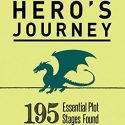
 delivers so many plot stages that I fell into the rabbit hole Soloponte took in writing this book.
 , by K.M. Weiland, this book provides an outline of what must go into a novel to make the reader want to finish the story. Except this is a scientific look at the process. Soloponte takes Joseph Campbell’s Hero’s Journey canon (I recommend
 ) and breaks it down further into what needs to happen as the hero journeys from the reactive (ordinary world) to proactive (adventure world) stages of the novel.


 books. Writers Digest serves up a weekly offering of



 Reading – Learning to identify patterns, techniques, plots, and story elements come from reading. Read as much as you can. I think the best writers spend more time reading than writing. Reading sparks ideas for your writing. For instance, the other day I was reading a technical article on generating oxygen on Mars. The article centered on making rocket fuel so Martians could get to Earth. I thought about terraforming; using oxygen to create an atmosphere. And if you could create oxygen, you could probably mix in other gases.
 Writing – Papa Hemingway used to say you had to just write with no stopping whatever came into your head. And then throw it away. Sort of like running oil through an engine, a writer must lubricate the keyboard to get everything moving. Now, I tend to think some of that literary lubrication can be saved. But if it is good enough, you’ll come back to it again. Like reading, writing must be done everyday. You have to put the words down on paper, or screen, so they can lead you to other paragraphs.
 Arithmetic – You are on your own here. I know how to find a word count. And I remember the PEDMAS formula so I can do those fun math quizzes that stump others. I learned statistics because it’s the best way to catch someone in a lie. But I couldn’t spend time on algebraic equations because I don’t have the patience. Besides, I’m a writer, what do I need math for. (Oh yeah, those paychecks for word count.)
