Wordsmith Holler

Original Pulp Fiction

Tag: writing

  • Buddy, The Rottweiler, and Charlie, the Dachshund, Find a Snack

    Buddy, The Rottweiler, and Charlie, the Dachshund, Find a Snack

    A Conversation

    “It’s really only a matter of time before they take that away.”

    “Nah, they don’t even see me.”

    “They seem to know when you’re into something you’re not supposed to be in.”

    “It’s the silence. Go make some noise. Scratch your crotch or something.”

    “It doesn’t itch.”

    “Don’t just stand there watching me. Go somewhere else.”

    “I can’t. It’s so fascinating.”

    “In what way?”

    “How you can get that whole thing in your mouth.”

    “Easy really.”

    “How so?”

    “I suck in the head first then hide the legs with my tongue.”

    “Ope, she’s coming over now.”

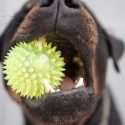
    “Buddy, spit out Missy’s doll.”

    “I told you she’d notice.”

    “I’ll get it back. No one will want it covered in spit.”

    “True. Give me a lick.”

    “Oh, you’re going to love the taste of this one.”


    Read more: Buddy, The Rottweiler, and Charlie, the Dachshund, Find a Snack
  • The Ely Pass Accident

    The Ely Pass Accident

    When I was in college, I was driving across Nevada around Christmas and hit a cow with my car. I wasn’t driving too fast, but I managed to come out of a cloudy valley onto a pass and there was a herd of cows in the roadway keeping warm. Since I was driving pretty slow, I managed to weave the car between the standing cows and most of them ran away. However, there was one steer in the middle of the road that refused to budge. And so I hit him with the side of my car. It all happened so fast and I remember hearing a “bump.” That’s not so bad, I thought. I drove the car to the side of the road, got out and saw the imprint of a six-foot cow on the side of my car. The dent was so bad, I had to pull it away from the back wheel so I could keep driving. The cow ran off and I never did see it.

    Anyway, I kept driving on and hoped the cow never died. In Nevada’s open range, the driver is responsible for killing a cow. Being a college student, I barely had enough money to drive home. I surely didn’t have money to buy a dead cow.

    Fiction comes out of real and imagined experiences. Here is a piece of flash fiction about a cowboy heading home.

    Thirty miles of snow blanketed the valley from range to range. Small strips of black pavement broke through the snow. The pavement disappeared as the road dipped farther around a bend. The cowboy paused the truck at the top of the grade and considered his future. Would it be possible to turn around and start over? Too many miles to go and too much behind him, he decided. A gust of wind raced around the cab and snow swirled around the hood. He looked down at an endless snowy valley. His breath blew fog on the window. He wiped away the frost and wondered if he should have called Sally to let her know he was coming.

    The cowboy sat until he felt the cold on his legs. The chill rode up from the bottom of the floorboard through his boots making his bones hurt. The chill reminded him things were not warm between him and Sally. He patted his thighs and shivered. He must try to reach her. He turned the heater up, pulled the truck into gear, and jumped the start smoothing out as the truck picked up speed.

    He considered the snow, cold, and all the times he had been stuck in this same spot shivering. He traveled this lonely highway all the time and it never seemed very warm. Watching the junipers pass against the snow, he expected to see a bandit ahead. This stretch of basin and range resembled a desperado’s playground. The roadway always seemed covered in snow with no one took the same road on the same day. Today was no different. The snow piled higher against a whitened sky and the truck began to make new tracks in the packed ice. He no longer saw the pavement. He watched for the mile markers and aimed down the middle.

    The cowboy imagined what was happening four ranges over. Sally focused on her two boys, three poodles, and a husband. He thought about her growing up. She rode beside him with her small legs hanging over the seat. Now her smallest boy could take her place. He rarely saw her now. An unspoken distrust hung in the air when they did see each other. Another cold he never could thaw. His daughter looked at him with suspicion when she poured him a cup of coffee in her kitchen. Her eyes wondered what he wanted and why he dropped by. He smiled and hoped she would forgive him. He wished they could be closer.

    The cowboy hummed an old melody, something he had heard once, in a haphazard manner. He stomped his heel on the down beat as the truck bounced off the center markers. He wondered if he shared this song with Sally once, rocking her to sleep or out of habit. He turned his attention to the road and began to whistle the melody.

    He regretted he never could find the middle ground with Sally. His daughter never liked horses or the ranch life. The time he was away had further wedged them apart. The divorce made it harder for him to be close. A cowboy’s fate he guessed. He made a fist in his lap, then relaxed as the truck climbed a hill. He geared down and the truck slipped in the ice. He caught the wheels from slipping before the bed fishtailed.

    A grey cloud enveloped around him as he climbed the grade and thick fog erased the mile makers. The cowboy felt for the center line. He inched up until the tires grabbed pavement. The truck sped up as the cloud passed and he could see the road ahead.

    A small herd of cows stood in the pavement warming themselves. He breathed in and stomped on the brake pedal. The brown and white cows looked at him like he was interrupting a meeting. He threaded past them sliding across the pavement. He hit a patch of ice and the truck bed began to spin. He steered into the slide but went too far sliding the truck around to the right. More cows ran away and he could see their wide eyes as they rushed off the road. The tuck continued to slip sideways and he could see it slowing down. An ounce of hope as he figured he might make it.Out of the passenger window he saw a large steer standing its ground in the middle of the road. The cow looked through him. He pumped on the gas and tried to drive forward. The acceleration gave the back-end more speed. The truck slipped even faster toward the standing cow. There was no way he was going to avoid a crash.

    He heard a small thump in the middle of the door and the truck stopped sliding. He took a moment to collect himself and he thought it was a small dent. Then the bottom of the truck rounded him landing in a crunch. Broken glass showered over him. A toolbox dropped and cut a gash above his right eye. He grimaced and passed out under the glove box.

    He laid in the cold air bleeding. Cows wandered around the overturned truck sniffing at the doors. The truck sat in their warm spot.

    A grey sky spit snowflakes. The herd of cows huddled near a borrow pit watching the truck. The cowboy woke up to a smell manure, urine, and cold. He rose up on his elbows as a small steer ran by the windshield. He found himself wedged between the door, the crumpled roof, and the steering wheel.

    The roof shot up bouncing him to the floor board. He felt a primal scream rise through him. The sound made him to want out. The cowboy reached for his crumpled hat under the dashboard and missed. The truck rocked under him and his butt slipped down toward the door. He reached again for his hat. The wild scream rose from under him a second time in what seemed like a hollow and desperate plea. The cowboy pulled up on the steering wheel and pushed on the driver door. It wouldn’t budge. Facing the broken window, he stuck a boot over the center hump, pushed himself up, and wiggled out.

    ***

    The cowboy fell face first in the snow. A smell of iron, urine, and manure caught up to him and he looked back at the truck. A bloody and mangled head moved under the window. The cowboy stood up and brushed ice off his neck. Melting ice burned a hole through the gash in his forehead. He patted the wound and a clump of blood covered his fingers. He wiped the blood off on his pants.

    The reflection in the door revealed a four-inch gash in his forehead. If he had hair, he would look scalped. Blood hung from the torn skin. He pulled the mess over the raw wound and patted his forehead. The falling toolbox had opened up a sizable piece of his face.

    He ripped off a piece of t-shirt leaving a curled up ribbon below his flannel shirt. He wrapped the thin material around the bloody mess tucking one end under the other to hold it in place. The white cloth soaked with blood making the bandage a scarlet banner.

    The wound made him queasy and he needed to sit down. He lowered to the ground next to his crumpled hat. He smoothed a dent in the crown and placed it over the scarlet bandage.

    The cowboy sat in the snow and shivered. The falling snow melted on his hat and jacket. The gash in his forehead hurt. He watched snowflakes dance across the valley. The wind swirled the snow around the junipers. Nothing moved. Nature paused to see what would happen next.

    A snort interrupted the silence. The cab moved up as the steer tried again to remove the truck from its back. He jumped away from the truck. The smell of urine became stronger. The cow let go and the cowboy watched as its eyes closed. The herd watched the truck with snow swirling around their heads. A few moved back to the center pavement. The cowboy shivered again and pulled his jacket tighter. The wind seemed colder than before.

    The crumpled cab lay on top of the steer. The cow no longer moved. The cowboy heard an odd whizzing nose and he realized the rear tires continued to spin. He walked around the truck and wrenched on the driver door. It wouldn’t open. He found a rock, smashed the window, and turned off the engine.

    He stood in a puddle of urine and blood next to the cow’s rear legs. He stepped away leaving bloody footprints in the ice. His forehead stung and a trickle of blood dropped from his eye.

    ***

    The cowboy sat underneath the overturned truck bed. He tolerated the smell of the dead cow by moving as far from it as he could near the tailgate. To keep dry, he sat on a carpet made from the clothes in his duffel. He had placed a few more layers of t-shirt around his wound. Outside, three inches of new snow-covered the ground from a couple of hours of snowfall. Small flakes fell at first, and then large, wet flakes came down like rain. None of the wet wood he gathered lit a fire with the few matches buried in his glove box. He never found the cigarette lighter. The stack of clothing failed to keep the cold ground from making his seat numb. He kept his bare hands tucked under this armpits and rocked back and forth to keep warm.

    No one came up the grade to discover his wreck from either side. For the longest time, he stood in the falling snow looking into one valley after another hoping for a rescue. The snow only made him wet and cold. Winter was the wrong time of year for a steady stream of cars. And no one knew he was out there.

    He laid his head on the metal panel and thought about Sally. She might be cooking dinner now. Macaroni, cheese, broccoli, and steak. He like a thick cut, medium rare. A wave of nausea rolled over him and he sat forward. The cold metal made his head hurt. He rubbed the makeshift bandage and came back with another hand of blood. He wiped it away on his leg and then held his head in his hands.

    What if I die out here?

    ***

    He thought about a time when Sally stood on her tiptoes to lick chocolate cake batter from a spoon. Her pink dress matched her toddler stockings. She reached up to get at the spoon and he kept pulling it away. He chuckled. No wonder she hated me, he thought. Another time, he let her paint his lips and color his eyes. He looked like a rodeo clown, but she liked it. Then there was the years he wasn’t around. She stopped counting on him and grew closer to her mother. After that, he couldn’t break through the distrust.

    He wondered what if he had stuck around? It might be different. No way to know. He let out a sigh. He would have found a way to screw it up. Nothing he did seemed to work.

    He looked at the dead cow mashed under the cab. It looked asleep. The cold no longer bothered it. The cowboy felt warmer. He shifted on the carpet and leaned to look under the tailgate. Still snowing and getting colder. The sudden change in altitude shot a quick pain behind his right eye. He could feel his heart beat through the blood-soaked bandage. He took a deep breath, laid back on the truck panel and closed his eyes.

    ***

    Sally held out a hot mug of coffee to him as he walked into the kitchen. She laughed as he burned his lip pulling the cup away from his mouth. He set the cup on the counter and reached out for her hand. She took it and he pulled her in for a hug. He smelled her hair and thought about what a great daughter he had.

    A highway worker pulled into the wide shoulder next to a pile of black cinders. The cows were long gone. A wrecked truck lay overturned near the far shoulder. Melting snow dripped down on the carcass of a dead cow under the crumpled cab. Broken glass spread out on the pavement.

    The red-haired worker in overalls looked under the tailgate. He found the cowboy laying on a bed of clothes with a smile. A brown bandage and dried blood covered the face of the dead cowboy.

    The worker stood up and looked out over the snow-covered valley of rabbit brush and junipers. He kicked away some snow from his boot. He looked the other way down the grade. Another long stretch of snow. Heck of a place to wreck, he thought. He spied a hawk flying across the valley.

    The bird hung on the wind channels between the ridges floating over the basin. Miles of chaparral and high desert spanned below. The hawk saw a rabbit and darted to the spot vanishing behind a stand of junipers.
     

    Read more: The Ely Pass Accident
  • The Cure for Back Pain

    The Cure for Back Pain

    A Conversation

    “I’m just going to take a quick walk to stretch my back.”

    “Does your chair tighten you up too?”

    “Something awful.”

    “I heard a rumor we might get new chairs.”

    “I heard it too.”

    “Either they give us new chairs or they supply us with an unlimited supply of Ibuprofen.”

    “Honestly, either option couldn’t hurt.”

    Read more: The Cure for Back Pain
  • March 15, 2017 Scribble

    I spent twenty minutes holding my head to the right as a doctor went in again for my fourth thyroid biopsy. “Boy this is really deep,” he said. “Yep, maybe you’ll be the guy,” I said. It is clear with have a nodule or two. We don’t clearly know if it is cancer. “At least if it is cancer, this is the best one to get,” said my endocrinologist. “It takes so long to grow.” Comforting. While other writers are busy taking people to other places, I’m in an endless loop of out-patient surgery. No, you would not be interested in the waiting, prodding, and sore neck. It doesn’t jump off as one of those stories you want to hear.

    ***

    Hemingway said, “There is nothing to writing. All you do is sit down at a typewriter and bleed.” True. Sometimes you just have to write it out and hope something sticks. Then let it fall to the floor. In Hemingway & Gellhorn  he says,” Never crumple pages. Always let them float gently into the basket. Any writer who rips out his stuff and crumples it will go insane in a year, guaranteed.” I like the idea of floating paper to the trash. I would float this to the trash, but it’s a huge monitor.

    ***

    It turns out nobody reads this blog. (more…)

    Read more: March 15, 2017 Scribble
  • After My Stroke: A Year of Possibilities

    After My Stroke: A Year of Possibilities

    epilepsy-623346_960_720
    Courtesy Pixabay

    Author’s Note: After my stroke in July 2015 I had to think about how I would proceed. This project started out as a way for me to focus on writing. The year took a different turn for me. I spent two months relearning how to walk, talk, and type. A had a stroke at the age of 51. It became a rebirth.

    After My Stroke: A Year of Possibilities

    A year ago I started this experiment with a lot of promise in my mind; it felt like I would finally focus on something and complete it. Then work piled on and I set this aside. I could always come back to it because it was something for me.

    The months rolled by and I found myself in Texas helping my son with a fireworks stand. Long, hot days and nights filled with outrunning the local flying insects. I still think about the bites on my leg. A few days after the 4th of July I was back in Nevada and working again. I sort of thought about this writing corner and promptly moved on.

    A week later I was staring at myself in the mirror and wondering why one eye was closed and the other was bigger than a rabbit’s eye. I had caked blood on my ear and my head hurt.

    (more…)

    Read more: After My Stroke: A Year of Possibilities
  • Finding the Character’s Pain

    Finding the Character’s Pain

    Sunshine and rainbows. We all would like to have a life free of stress and full of sunshine and rainbows. A life of bliss only leads to trouble. There is no excitement, no drama, no life.

    Writers need to run as quick as they can from sunshine and rainbows. At least when developing a story everyone will want to read. Can the main character end up in a land of beauty and peace? Sure. Just don’t plan on writing a sequel.

    rainbow-495287_960_720
    Courtesy Pixabay

    Pain, wounds and disaster are what we need to strive for when writing a good main character. Give a character pain and a past full of strife, trouble, and challenges. Allow them to triumph. And then smack them again.

    Wounds provide the best motivation to overcome an obstacle and move the story forward. Give your characters a reason to fulfill a basic need for love, faith, understanding, and belonging. Make this character pain so intense they must do something to overcome it.

    Pain and suffering also suggests your character has a basic flaw that leads them to more pain. A character weakness that they must hide or tackle in order to move the story forward. Allow the character to show they have the strength to overcome their weakness.

    The whole goal is to make the story move from scene to scene. The best way to do this is by finding the pain.

    [plain]What are your thoughts about character development? Post your comments below.[/plain]
    Read more: Finding the Character’s Pain
  • Second Writing: Proofreading and Editing Skills

    By all means write as fast as you can and put the words on paper. In the movie Finding Forrester, the fictional reclusive author William Forrester tells Jamal Wallace, “No thinking — that comes later. You must write your first draft with your heart. You rewrite with your head. The first key to writing is … to write, not to think!”

    No thinking — that comes later. You must write your first draft with your heart. You rewrite with your head. The first key to writing is … to write, not to think!

    The second writing comes through the proofreading, editing, and re-writing.

    Too many writers get bogged down in re-writing each sentence as they write it. A missed opportunity to allow expression and creativity to flow on the page. Capture the spark of genius first and allow it to build. Stopping to edit just breaks the chain and makes it difficult to put down pages.

    The story develops and becomes refined in the second writing. I like to let the story sit and ferment like a bowl of bread dough; it sits and bubbles until I have the time to return to make the loaves. The second writing allows you time to smooth out the wrinkles and improve on the structure. At this stage you notice the awkward phrasing, the empty dialogue, and the story weaknesses.

    In the coming weeks, I plan to began writing a short story about a girl who comes to Las Vegas seeking revenge. Over time, you may notice the story will contain strikeouts and edits. I plan to keep those in there to show you how I am editing and re-writing the story. Of course, I would appreciate your feedback too.

    [plain]Do you write like a whirlwind, or do you carefully consider each word? What are your thoughts on getting words on the page? Post your comments below.[/plain]


    Read more: Second Writing: Proofreading and Editing Skills
  • Character Introductions: Backstrom

    Bones is one of my favorite police procedurals, although not as dark as the richly-disturbing Criminal Minds, with humor, well-written characters, and charm.

    Last night, Bones writer-producer Hart Hanson brought to life Detective Everett Backstrom, a Fox-TV series titled Backstrom based on a Swedish book series by Leif G.W. Persson.

    Backstrom has a bit of a House feel to it, with the lead character, played marvelously by Rainn Wilson (The Office), and full of wonderful writing. For instance, we immediately understand Det. Backstrom has problems, quirks, and a biting humor. (more…)

    Read more: Character Introductions: Backstrom
  • The False Ending

    I have mentioned that many stories fail to gain traction in the second act. This is where the viewpoint character forgets why they are in the story. Of course, it is the writer who has forgotten; either by writing by their pants or failing to plot in enough conflict to keep the story moving forward. Stories thrive on conflict and bad things must happen to the hero before it all ends up as good and satisfying.

    That is why within the second act, is the false ending. In fact, you might say this is the top of the hill. And this is why screenwriters call it the midpoint. Everything works up to the midpoint and then tumbles down into the depths of hell before the beginning of the end.

    Screenwriters know they must take the viewer to the first turning point within 12 pages. Novelists also incorporate a turning point before the end of the first act. The second act is reserved for the hero doing heroic things; nothing can go wrong. And then it happens: the midpoint. Writers reserve the midpoint for the center of the story and add the ultimate conflict for the hero to face.

    The midpoint is when the girl discovers the guy is hiding a secret girlfriend (who usually is revealed in the third act as his sister). Or at the midpoint, the hero faces emotional or physical death. Will she make it? Keep watching. Everything is revealed in the third act.

    A good midpoint incorporates a false victory for our hero; she defeats the bad guy, only to discover a badder bad guy is standing behind her. Another excellent midpoint is to have the hero face ultimate disaster; the singing cowboy movies called this a cliffhanger. Finally, a midpoint should provide the ultimate obstacle in the story. What happens to give the antagonist the upper hand? What is the chink in our hero’s armor?

    Midpoints add conflict, which is the main reason anyone reads a novel or watches a movie; they want to see the hero defeat the antagonist. They want to see the hero survive the midpoint.

    [plain]How have you used this technique to infuse your stories with conflict? Reply below in the comments.[/plain]
    Read more: The False Ending
  • Pantser Plotter

    There are two camps of thought: the people who listen to the muse and write by the seat of their pants and the people who write an entire book-length outline prior to starting to write.

    I prefer to combine the two, without writing an entire book-length outline. Let me explain my thoughts on this debate.

    Pantsers argue they are free to listen to the story and the characters. It is a muse-centric approach, with the characters exploring the milieu and wandering about discovering the story. All fine and well. It is interesting how a story can take on a life and allow a writer to document scenes and fill in the story.

    Plotters say there is no way a story can take shape without a road map: it requires a structure to allow the characters to face their inner and external conflicts. The characters are forced to face their fears. Plotters like to know where the story is headed.

    Here is my take: Pantsers need to outline and Plotters need to be open to just writing.

    In my experience, without an outline I have twice been abandoned by my characters in the second act. They exhibit attention deficit disorder and climb out of the book. The characters say “well, that’s all I got,” and the story sort of fizzles out. I’m rewriting “Fish Tacos: Or How I Went To Mexico to Save My Soul” because the main character started bitching about his past and failed to get off his butt. Sure, I’m the writer, it is my story, but I let the character dictate where he would go and when he would get there. Believe me, if left to his designs, the main character would still be sitting in the desert waiting to move.

    So now I plot everything: short stories; novels; non-fiction; and, screenplays. I give the viewpoint characters a purpose and a timeline to meet. I challenge them to face their demons. I gift them happy successes. By the time the story ends, they see their doubts, obstacles, challenges, and growth.

    In some ways this is the perfect way to write by the seat of your pants: the story structure lets them wander about, as long as they meet their deadlines. So I guess I’m a Pantser Plotter . It seems to be working.

    [plain]How do you plan your projects? Do you outline or just let it flow? Leave a comment below.[/plain]
    Read more: Pantser Plotter