Wordsmith Holler

Original Pulp Fiction

Category: On Writing

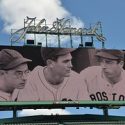
  • Where Did You Go Joe DiMaggio?

    Where Did You Go Joe DiMaggio?

    Good question.

    All I can say is I have been writing, reading, writing, and reading, in no particular order. I just have not updated my blog.

    After years of pantsing things to roughly 20,000 words, I have decided to outline, research, and think about my projects. Honestly, the reason things tended to drift was I ran out of things to say. With just a little research, I could write easily another 50,000 words. My fiction would read like Wikipedia, but I could go on and on.

    K.M. Weiland offers a wonderful set of educational books, if you lack motivation to plan and afraid of letting pantsing go. And if you think of each chapter as a scene, i.e. James Patterson, you might be able to get to the pinch and plot points without much effort. (These authors helped me focus on ideas and I am not selling their courses.)

    sports-1391871__180

    No offense to pantsers, but at least with an outline I have a road map of where the story is going. I can still let a character run with it, but I also can reign them in and head back to the plot. It is a relief, actually.

    Honestly, outlining takes quite a bit of pressure off. At least you know where a character is going when you decide to pants-it.


     

    Read more: Where Did You Go Joe DiMaggio?
  • Inspiration: Mining Subjects Close to My Heart

    Inspiration: Mining Subjects Close to My Heart

    I grew up trout fishing. But I will never be able to capture the river like Norman Maclean.

    I once toiled as an innkeeper. But my experiences were nothing like described by John Irving.

    inspiration

    Inspiration Comes From Experience

    I am a product of the American West and my inspiration comes from those people. I take inspiration from their stories and those subjects are close to my heart.

    When Tom Booker stopped at a remote four-corners somewhere between Nevada and Utah, I was there. Nicholas Evans reminded me I had been at that crossroads a few times. I understand the loneliness of a desert valley surrounded by a ring of mountains.

    I have this great idea for a novel set in Paris, but I have never been there. I struggle to place my characters at a corner cafe I have never set foot in. The story lies flat because I can’t put any description into the place.

    Irving wrote about the feeling he had as a child. The deeper context comes from the adult. Maclean also wrote about his family, his childhood, and the pains of adulthood. All wrapped up in these stories are bigger images, but the writers mined subjects close to their hearts to arrive at the wider story.

    It is better to stick to subjects you understand and attempt to create deeper meaning. Your experiences fold together to create a grander tapestry. Would it be impossible to write the Paris story? Likely not, if I visited the Arrondissements and smelled, tasted, and wondered.

    Stories come easier when the milieu can be seen by the author. Otherwise, a lot of research must be done. Inspiration comes when the writer can just tell the story. Place is easiest arranged when the writer already sits there.

    [plain]What do you think? Can a writer create a place they have never visited? Or, do you have to experience it first to obtain inspiration? Leave a Comment below.[/plain]


    Read more: Inspiration: Mining Subjects Close to My Heart
  • Fragments of My Mind: The Muse Dilemma

    Fragments of My Mind: The Muse Dilemma

    So here I sit with the fragments of four great ideas and as a result four unfinished projects. At this point, I see them taunting me.

    “Come on. Finish me. I dare ya.”

    Honestly, one only needs a rewrite. Only needs a rewrite. Like that is something I want to do. Coming up with the idea was one thing. Actually having to get down and dirty for the rewrite is a whole other matter.

    Another project has morphed into a mess. I allowed the pantser in me to bash the plotter over the head. And of course, I now have two fairly good ideas. Only, I started with one and I don’t have the energy to sort it out.

    Fragments

    Does my pondering sound familiar?

    Likely, it does if you are the type of writer who has a pretty good knack at creating fragments of great ideas but a fairly rotten track record for getting anything done. As Ali Luke, writer and coach, asked a few years ago, “Do you have a bunch of first chapters tucked away in a drawer – for seven different novels?” [footnote]1[/footnote]

    And so it goes. The Muse Dilemma, or How I Managed to Let a Bunch of Good Ideas Become a Pile of ****.

    (more…)

    Read more: Fragments of My Mind: The Muse Dilemma
  • Write Everyday Something

    Write Everyday Something

    Write Everyday

    Writers should write everyday. Not the shopping list, but a long descriptive piece about the day, a thought, or an impression. Sometimes ideas come from these small jaunts. Hemingway said to get started a writer must, “write one true sentence.”[footnote]1[/footnote]

    “I’ve been lately thinking about my life’s time.” – John Denver

    John Denver was a songwriter you wrote roughly five songs when he became a success. Some of the songs came easily. Others took their time to incubate.

    “When asked if he had a specific method or approach to writing songs, Denver replies that he is a very unstructured writer. “I don’t sit down every day and try to write a song. For some people, it’s like a job and that’s what they do. They go in and try to write a song,” he says. “For me it quite often begins with a phrase like ‘leaving on a jet plane’ or ‘follow me’ or ‘back home again’ or ‘sunshine on my shoulders’.

    “What’ll happen there’ll be a phrase or line that I’ve come up with. When I’m driving I’ll start writing the song in my head. Then when I get to a guitar, I’ll sit and play it on the guitar until the rest of the song comes. Some songs come very quickly. I wrote “Annie’s Song” in 10 minutes one day on a ski lift – that’s how I know it was 10 minutes. Then other songs like “Rocky Mountain High” took about six or seven months to write.” [footnote]2[/footnote]

    (more…)

    Read more: Write Everyday Something
  • After My Stroke: A Year of Possibilities

    After My Stroke: A Year of Possibilities

    epilepsy-623346_960_720
    Courtesy Pixabay

    Author’s Note: After my stroke in July 2015 I had to think about how I would proceed. This project started out as a way for me to focus on writing. The year took a different turn for me. I spent two months relearning how to walk, talk, and type. A had a stroke at the age of 51. It became a rebirth.

    After My Stroke: A Year of Possibilities

    A year ago I started this experiment with a lot of promise in my mind; it felt like I would finally focus on something and complete it. Then work piled on and I set this aside. I could always come back to it because it was something for me.

    The months rolled by and I found myself in Texas helping my son with a fireworks stand. Long, hot days and nights filled with outrunning the local flying insects. I still think about the bites on my leg. A few days after the 4th of July I was back in Nevada and working again. I sort of thought about this writing corner and promptly moved on.

    A week later I was staring at myself in the mirror and wondering why one eye was closed and the other was bigger than a rabbit’s eye. I had caked blood on my ear and my head hurt.

    (more…)

    Read more: After My Stroke: A Year of Possibilities
  • Finding the Character’s Pain

    Finding the Character’s Pain

    Sunshine and rainbows. We all would like to have a life free of stress and full of sunshine and rainbows. A life of bliss only leads to trouble. There is no excitement, no drama, no life.

    Writers need to run as quick as they can from sunshine and rainbows. At least when developing a story everyone will want to read. Can the main character end up in a land of beauty and peace? Sure. Just don’t plan on writing a sequel.

    rainbow-495287_960_720
    Courtesy Pixabay

    Pain, wounds and disaster are what we need to strive for when writing a good main character. Give a character pain and a past full of strife, trouble, and challenges. Allow them to triumph. And then smack them again.

    Wounds provide the best motivation to overcome an obstacle and move the story forward. Give your characters a reason to fulfill a basic need for love, faith, understanding, and belonging. Make this character pain so intense they must do something to overcome it.

    Pain and suffering also suggests your character has a basic flaw that leads them to more pain. A character weakness that they must hide or tackle in order to move the story forward. Allow the character to show they have the strength to overcome their weakness.

    The whole goal is to make the story move from scene to scene. The best way to do this is by finding the pain.

    [plain]What are your thoughts about character development? Post your comments below.[/plain]
    Read more: Finding the Character’s Pain
  • Second Writing: Proofreading and Editing Skills

    By all means write as fast as you can and put the words on paper. In the movie Finding Forrester, the fictional reclusive author William Forrester tells Jamal Wallace, “No thinking — that comes later. You must write your first draft with your heart. You rewrite with your head. The first key to writing is … to write, not to think!”

    No thinking — that comes later. You must write your first draft with your heart. You rewrite with your head. The first key to writing is … to write, not to think!

    The second writing comes through the proofreading, editing, and re-writing.

    Too many writers get bogged down in re-writing each sentence as they write it. A missed opportunity to allow expression and creativity to flow on the page. Capture the spark of genius first and allow it to build. Stopping to edit just breaks the chain and makes it difficult to put down pages.

    The story develops and becomes refined in the second writing. I like to let the story sit and ferment like a bowl of bread dough; it sits and bubbles until I have the time to return to make the loaves. The second writing allows you time to smooth out the wrinkles and improve on the structure. At this stage you notice the awkward phrasing, the empty dialogue, and the story weaknesses.

    In the coming weeks, I plan to began writing a short story about a girl who comes to Las Vegas seeking revenge. Over time, you may notice the story will contain strikeouts and edits. I plan to keep those in there to show you how I am editing and re-writing the story. Of course, I would appreciate your feedback too.

    [plain]Do you write like a whirlwind, or do you carefully consider each word? What are your thoughts on getting words on the page? Post your comments below.[/plain]


    Read more: Second Writing: Proofreading and Editing Skills
  • Character Introductions: Backstrom

    Bones is one of my favorite police procedurals, although not as dark as the richly-disturbing Criminal Minds, with humor, well-written characters, and charm.

    Last night, Bones writer-producer Hart Hanson brought to life Detective Everett Backstrom, a Fox-TV series titled Backstrom based on a Swedish book series by Leif G.W. Persson.

    Backstrom has a bit of a House feel to it, with the lead character, played marvelously by Rainn Wilson (The Office), and full of wonderful writing. For instance, we immediately understand Det. Backstrom has problems, quirks, and a biting humor. (more…)

    Read more: Character Introductions: Backstrom
  • Character Sketch

    Your job, as a writer, is to introduce your characters in a way that:

    1. is interesting
    2. brings them to life for the reader
    3. conjures up an image that is as close as possible to the way you see them in your mind
    4. gives the reader more information than just their physical appearance – i.e. also gives an insight into their personality and what drives them

    Your job is to let every sentence earn its keep – not just telling us what happens, but leading us to other understandings as well. Use this as an opportunity to enhance the emotional depth of the piece. Describe actions that lead to reactions. Avoid the easy descriptions, the cliches, and the stock phrases. Put yourself in the heroine’s mind. Imagine what she’s thinking. Help the reader to experience her emotions and to see what she’s seeing. It’s a lot of extra work – but your writing will leap up a couple of levels.

    Read more: Character Sketch
  • The False Ending

    I have mentioned that many stories fail to gain traction in the second act. This is where the viewpoint character forgets why they are in the story. Of course, it is the writer who has forgotten; either by writing by their pants or failing to plot in enough conflict to keep the story moving forward. Stories thrive on conflict and bad things must happen to the hero before it all ends up as good and satisfying.

    That is why within the second act, is the false ending. In fact, you might say this is the top of the hill. And this is why screenwriters call it the midpoint. Everything works up to the midpoint and then tumbles down into the depths of hell before the beginning of the end.

    Screenwriters know they must take the viewer to the first turning point within 12 pages. Novelists also incorporate a turning point before the end of the first act. The second act is reserved for the hero doing heroic things; nothing can go wrong. And then it happens: the midpoint. Writers reserve the midpoint for the center of the story and add the ultimate conflict for the hero to face.

    The midpoint is when the girl discovers the guy is hiding a secret girlfriend (who usually is revealed in the third act as his sister). Or at the midpoint, the hero faces emotional or physical death. Will she make it? Keep watching. Everything is revealed in the third act.

    A good midpoint incorporates a false victory for our hero; she defeats the bad guy, only to discover a badder bad guy is standing behind her. Another excellent midpoint is to have the hero face ultimate disaster; the singing cowboy movies called this a cliffhanger. Finally, a midpoint should provide the ultimate obstacle in the story. What happens to give the antagonist the upper hand? What is the chink in our hero’s armor?

    Midpoints add conflict, which is the main reason anyone reads a novel or watches a movie; they want to see the hero defeat the antagonist. They want to see the hero survive the midpoint.

    [plain]How have you used this technique to infuse your stories with conflict? Reply below in the comments.[/plain]
    Read more: The False Ending